
By Jim Langley
There are so many choices these days in tires and their setup for road and all-road bicycles (aka “gravel bikes”) that it’s no surprise a lot of roadies have questions on what’s best. So I want to ask for your help in recommending the best setup for a New York roadie named Keith who wrote in recently.
I’ll add my two cents, and then please share what setup you use or would recommend for him in a comment. Our advice is sure to help other cyclists as well.
Keith’s Question
“As a prerequisite … I own forty classic road bikes for the most part with clincher and tubular wheelsets … no tubeless wheels. Everything from a 1959 Cinelli Model B to a 2006 LeMond Victorie with a 2008 Shimano Dura-Ace group. Is there anything to be gained using some type of sealant with inner tubes? I’ve managed to paint my framesets pink in the past with sealant!!
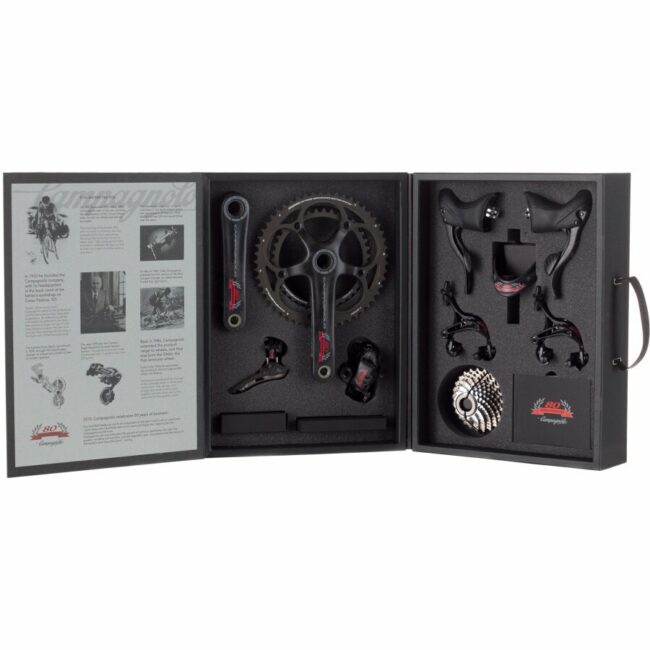
What is your take on the best way to prevent flats? At 65 years old, I’d just assume ride and not repair as much as possible. Does an old guy try new tricks? Currently building two “new to me” NOS framesets I’ve had since new .. never built .. a Colnago C-50 and a Serotta HSG .. both being built up with 80th anniversary Campagnolo groups. Plans are to use clincher wheels. What do you think?”
My Thoughts on Keith’s 3 Main Questions
I’ll focus on the things Keith asked but feel free to offer any and all tire setup tips you think will be helpful.
1. Is anything to be gained by using tubes that come with sealant inside (or by putting sealant inside inner tubes)?
They’re popular and receive great reviews, so plenty of people feel that tubes with sealant inside are effective at preventing flats. One of the oldest companies making them is Slime. They have Presta valve versions in a range of road bike sizes: https://amzn.to/4aRx6JQ.
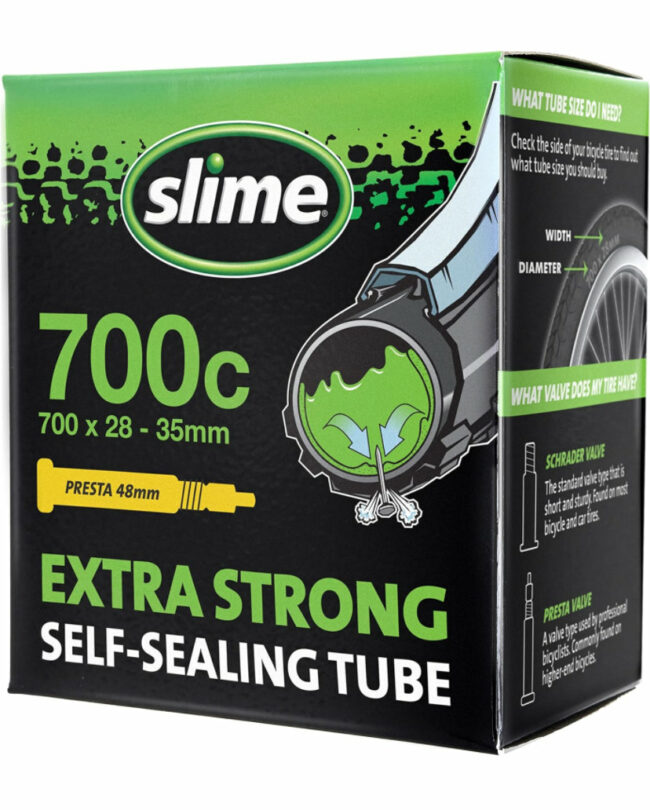
Since the Slime sealant is inside the tube and the tube is inside the tire, the only way for the sealant to paint your bike pink (I think Slime is green actually, but I might be wrong), would be if you blew the tire off the rim. And that’s unlikely as long as the tire is properly seated and not over inflated.
The one knock on sealant inside tubes is that it adds a little weight right where you might feel it since it’s rotating weight. But, the people who use sealant don’t feel that that little extra weight is a problem.
Another issue with sealant is that it can gum up the Presta valve making it more difficult to top off your tires or even to let all the air out if you flatted and the sealant didn’t fix it and you wanted to replace the tube. Usually, though, you can remove the valve core to get the gummed up valve out of the way.
And if the valve itself is clogged, just stick a spoke or the straw from your WD-40 lube down into it to break through the clog and get the air to come out (it’s good to carry a clog breaker like this in your on-the-road repair kit).
Regarding injecting sealant into tubes you might already own, multiple readers have told us that it definitely helps prevent flats. And, the’ve done it with tubular tires (also called “sew-ups”) and for clincher inner tubes. So, overall, you might want to give it a try to see how it works for you Keith.
2. What’s the best way to prevent flats?
This is going to sound too obvious but maybe some beginners are reading so I’m going to say it. The best way not to suffer punctures is to watch where you’re riding. I’m in my 70s now and I’ve noticed that I’m not seeing the road and trail as well as I used to. So I believe the older you get, the more you need to focus on the lines you choose.
Staying out of the gutter where motor vehicles blow all the grit and road debris is a good start. Watching for shiny stuff and steering clear of it will keep you out of any broken glass out there. Potholes can hide in the shadows and if you hit them hard enough you can bottom out a tire and pinch flat your tube.
A good pair of sun glasses might help you see these hazards in time to avoid them (search our site for lots of reviews). On a road where you can’t avoid potholes you always want to ride like a jockey, keeping your weight off the saddle and your elbows and knees bent to absorb any shocks from the road so that they can’t smash into your wheels and bottom out the tires.
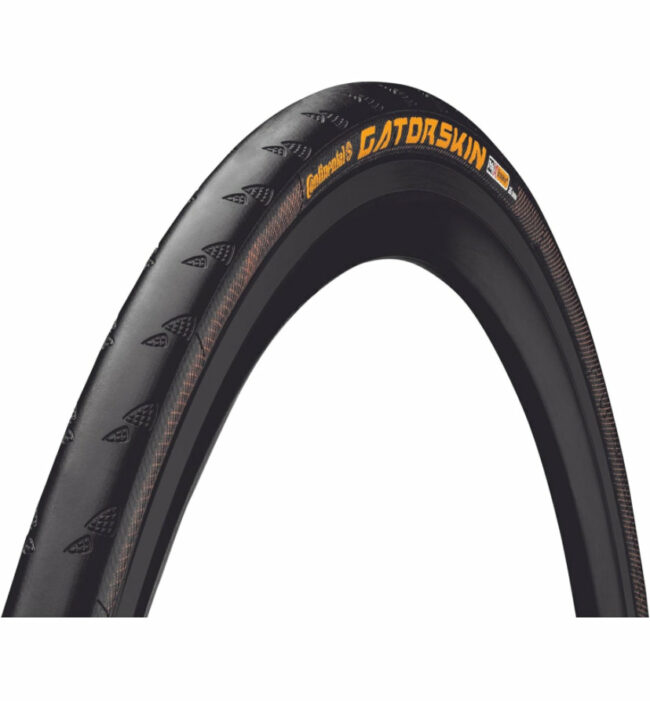
Those are some riding techniques that can really help. For tires that stop flats, there’s one that has been a reader favorite forever. It’s the Continental Gatorskin, which comes in many sizes. Here’s a 700 x 28c: https://amzn.to/3Vq0ulS.
And speaking of tire sizing, that’s another tip to prevent flats. If your frame allows riding wider tires, that can help prevent flats for some riders too.
3. Should I stick with clincher wheels and tires for my upcoming Colnago and Serotta full Campy bike builds?
Keith didn’t say it but reading between the lines, I think he might actually want to know if he should stick with standard tubed clincher tires or maybe consider tubeless clincher tires? Because the other choice, tubular (sew-up) tires would require wheels with tubular rims in order to glue on the tubular tires.
Since Keith already experienced a tire blow-out and sealant bath, I think he might not want to try tubeless. But, when properly set up with a good tubeless rim, the right rim tape for it, a good tubeless valve, sealant and tubeless-ready tire, lots of riders experience flat free rides most of the time.
But that’s a lot of things to get right and not everyone gets it right doing it themselves. Setting up standard clinchers tires and tubes is easier for sure. And, it’s also easy enough to carry spare tubes to fix flats when you get one. Plus there’s never any sealant mess, or any need to check sealant and add it either.
And taking into consideration that Keith’s building two classic road bikes, I’m thinking he’d be best off sticking with standard clincher tires and tubes, probably without sealant inside too. Especially if his Colnago and Serotta can accept at least 28mm wide tires.
The wider rubber will help with the flat prevention and allow lower pressures for a nicer ride. As to what tires to buy, I think Keith might want to try some Italian brands for his Colnago such as Vittoria Corsas or Pirelli P Zeros and for his Serotta maybe some Specialized Turbos since Specialized is American.
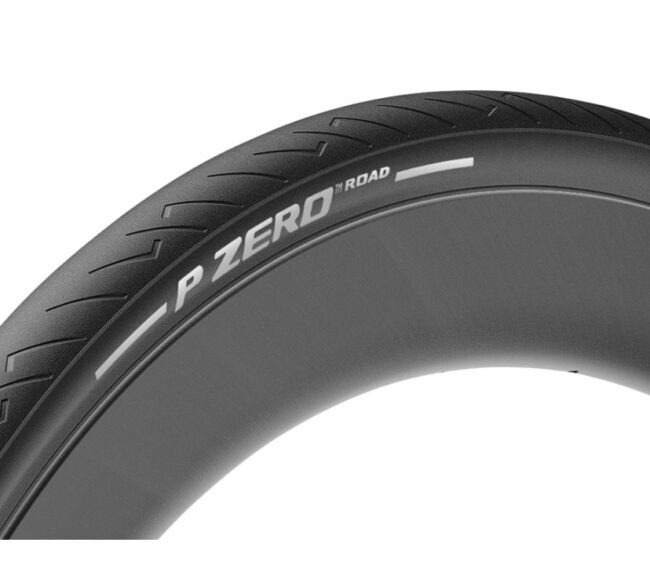
I’ve ridden all those tires enough to know they perform well and feel great rolling along and cornering. I haven’t however ridden them enough to promise Keith flat-free rides. But, if his new builds can handle wider rubber run at lower pressures, I think they’re worth trying.
Your Take
Please share what tire and tube setup you would recommend for Keith. Thanks!
Jim Langley is RBR’s Technical Editor. A pro mechanic & cycling writer for more than 40 years, he’s the author of Your Home Bicycle Workshop in the RBR eBookstore. Tune in to Jim’s popular YouTube channel for wheel building & bike repair how-to’s. Jim’s also known for his cycling streak that ended in February 2022 with a total of 10,269 consecutive daily rides (28 years, 1 month and 11 days of never missing a ride). Click to read Jim’s full bio.
Tires have improved a lot in the the twenty years I’ve been riding big miles. I can go years without a flat, and flats on group rides are now a rarity, whereas twenty years ago they seemed to happen on every ride. When tubeless came out they were touted as having fewer flats, but now they’re mainly touted for a smoother ride because you can run them at lower pressures. I’ve stuck with clinchers because tubeless seems like too much of a bother (and I’ve known people who did flat and couldn’t get them off/on). I think the Continental 5000, which is very popular, is now pretty close to Continental’s Gatorskin for flat resistance.
I ride Rene Herself 35mm tires . They’re plush riding, tremendous at sticking to the road on downhill turns, and they come in 4 casing strengths. I ride the standard casing. As was already said, tires are so good that few flats happen to me even without motor protective thicknesses. I tour with panniers with a tubed setup with the same tires. I used to only ride gatorskins but the ride is much stiffer and the cornering not grippy.
helmet mirror helps avoid flats.
why?
you have way more confidence in riding away from the glass lane [gutter, bike lane, whatever]
Use TPU inner tubes.
For few flats, great ride and ease of maintenance I stick with tubes and wide tires, but have moved to TPU as they are very light and compact to carry as a spare. For the last several years we have been riding on the smooth versions of Rene Herse tires with the Standard casing. At 180 pounds I use 650×48 while my wife runs 650×42. We run 40 psi on pavement, but do not add air until it gets down to 30, about 3 weeks. Ride and grip are great. Off pavement we run 30 psi. These have worked well on the KATY, GAPCO and similar trails. Only rarely have I thought knobbies would have been any better. You can buy their Extreme casing but I don’t think most people need that.
Those frames require caliper brakes, which are not recommended for TPU due to heat build-up. Those frames will likely have brake bridges, etc for the caliper brakes. Those most likely will restrict tire size to 700×25 (some as bad as 700×23; I know some are lucky to have one that can accommodate 700×28). I have read too many say tires with that volume really do not give all the “benefits” of going tubeless. One thing about Slime tubes – the sealant will settle during storage. Initially, the sensation will be of an out-of-round tire. The colder the weather, the longer this sensation will last (but it does go away!).
Over the past few years I’ve ridden with cyclists who have tubless tires. The problem is that if you have a flat while on some country road you’d better hope you have cell phone coverage because you’re calling someone to come and pick you up.
Good point, My newest bike is a 2009 and the rest are mostly 80’s steel so not familiar with tubeless tech. That said, I had to help the same fellow rider with a flat on two different rides. He was running a tubeless setup but with a TPU tube installed instead of sealant. It took some creative use of the tools we had along with a lot of effort just get the tire bead to unseat from the rim. Then a lot more muscle to pump the tire up enough for the bead to seat, which it did with a loud pop, like you hear when they install a new tire on your car’s rim. All might have been avoided with sealant but that’s another potential mess.
Fortunately, I have enough spares to live out my days without disc brakes and tubeless rims.
I am in my 80’s and I like to keep it simple. I ride several different tire widths on my several bikes (I also have some 40 bikes) and do not experience much difference as I ride lower pressure on all tire widths – yes, even lower on the wider widths).
I would suggest clinchers with tubes based on my experience; I have maybe one flat/year so, that would be my choice. If you are experiencing several flats/year, you might want to consider something different (or, as mentioned, change your riding habits).
Gatorskins are good but, in group rides I find riders have nearly as many flats with Gatorskins (or similar) as they do with other brands. And, Gatorskins are more difficult to remove/reinstall than other brands. The worst combination for tire removal is a Gatorskin on a tubeless rim (in my experience).
I hate the mess when I help change a flat which has Slime or is tubeless – as indicated above – another reason to keep it simple..
.
>> Gatorskins are more difficult to remove/reinstall than other brands. <<
You can say that again! I've used Gatorskins for years and they are the most difficult tires to get on the rim I've ever tried. (There's actually one that's MORE difficult — the Continental Gator Hardshell, which is a super-flat resistant version of the Gatorskin. I have to bring them to a bike shop to mount them, which basically adds $10 to the cost of the tire or the flat repair each time I have to do it.)
I put my Gatorskins in the sun for an hour before installing and find it to be a big help. Almost no flats with them. I go tubeless for my mountain bike and my gravel bike. Love the smooth ride with lower pressures, and have had few problems.
Late last year, I rode PACTour’s Northern Transcontinental on a new Canyon Aeroad with 28mm GP5000 Tubeless. Got clear across the country into New York Finger Lakes region before my first flat. It had plenty of steel poking through the casing by that point and I’d apparently run out of sealant. Put a tube in and was on my way as easy as if it had a tube in it to begin with. So +1 on the GP5000, tubeless they are great tires, good puncture protection, low rolling resistance, If you include the training miles, that was 1 flat as tubeless tires in around 3700 miles. I tried tubes for another day or so, but the casing was so thin I kept flatting, so I put a new tire (tubeless) on.
I did PACTour Desert camp several months later and based on horror stories of the thorns in Tucson, switched to 28 mm Gatorskins. Got 4 flats in the first 500 miles, all short, thin steel from tires. I’ve put another 500 miles on the tires in my home area with just one flat. Gatorskins are heavier and slower than GP5000 and require a tube. I wouldn’t buy again. 5 flats per thousand miles so far.
PS I loved Tubular tires, but hated (with the fire of a thousand suns) the process of gluing them. TUFO tape is a godsend. It takes the hard work and MESS out of tubular tires.
This was a timely article and discussion. as I had the unfortunate experience a few weeks ago of getting a pinch flat about one second before beginning a right turn (taking the apex) at the bottom of a hill.
I didn’t realize I had the flat after I hit a gap in the concrete slabs hard (and latex can flat silently), and couldn’t understand in the moment why the bike was sliding away.
Invariably the bike could not hold the turn and I slammed down hard in my right side, breaking my right femur in two. My MIPS helmet cracked but did its job (I only learned later that it cracked, I didn’t even have a headache!).
My rod and screws repair will take a while to recover from. I’m on a walker but am being told I will recover 100%, it will just take a few months (which is a testament to modern surgical advancement).
This has forced me to consider if there is anything I could do in the future to prevent this and I have a lot of time to think right now! Tubeless would likely prevent this from happening, which would require an investment in new wheels, different tires, sealant and a learning curve. Maybe a liner too? Maybe it’s worth it.
But is it such a freak occurrence that I should consider sticking with tubes? I don’t get many flats and most of them one gets when going straight…just terrible timing for me on this one. I would prefer to keep it simple.
Final note….it was a small consolation to me to see that even one of the best bike riders in the world today (Pogaçar) who had a flat front tire in this years Giro and knew it, tried to make a slow speed turn and couldn’t control his bike (scrub ahead about 30 seconds to see this):
https://youtu.be/Dt9VQ3XmHmI?si=fHsiefTG9HXdnhgP
Having ridden a bike for 45 years, and logged well over 200,000 miles, I thought I would throw in my 2 cents. My older Serotta XLS steel, originally built for Davis Phinney, will not take anything wider than 25s. For many years I have ridden on Vredestein tires. with Michelin ultra-light tubes. My problems have been minimal. Of course, Vredestein is becoming more difficult to get. My last 2 orders came from an Amazon European warehouse – free shipping, of course. Unfortunately,Vredestein has not kept up with any current trends. More to the point, these tires stay perfectly round. Most other brands I have tried seem to flat-spot when left for a couple of days. This is very annoying when starting out on a ride. Shades of the old tubular days when I had to hang the bike when I came in from a ride, deplete the air in the tire, all to prevent flat spotting.
Another feature I started looking for is a smooth surface that contacts the road, No tread, whatsoever. This eliminates picking up small pointed objects that get stuck in the tread and ultimately causes a flat. This is critical if you ride in an area with semi-trailers, such as a distribution facility or a rail yard. Trucks still use steel belted radials and small pieces of the steel wire will wear off. These can easily cause a flat if these get stuck in any tread on a bicycle tire. Often these small wires are very difficult to find. I have seen flats caused by these pieces of wire, the tube patched, and unless the tire is mounted in exactly the same position relative to the tube. these is always another flat in just a few miles. Mind you, this is all to maintain a low rotational weight and provide maximum security on your older road bike. Many of the tires made for wider rims on carbon frames, road and gravel, I call “cast iron.” These are fine, if you are not concerned with rotational weight.
I now ride a Specialized Creo e-bike. This has Specialized 28mm tires on relatively narrow rims. Most of my friends with the same bike (our Geezer group) use 32 or wider tires on the road. My 28s are pumped to 60 lbs. Some of my friends with the wide tires pump them all the way to 25 lbs. They cannot understand why they cannot keep up on a downhill. I also do not seem to be as wiped out after a 50-60 mile ride.
Oh, well… way too many options these days. Enjoy your rides.
Old school here. same at 62 still riding my 2 vintage road bikes from mid 70’s w/ campy nuovo & super. only thing not riding original tubular rims / tube silk tires. riding 700c x 23. he should too.
I run Continental Gatorskin Hardshell tire on both my road and touring bikes. When I moved to Arizona 10 years ago from Pennsylvania I flatted 3 times in the first week. I don’t patch tubes and at about $8/tube I had to find a solution. Metro Phoenix roads have a lot of gravel from gravel trucks and landscaping debris (read thorns) from all the landscapers driving around with clippings from their landscape jobs falling out of their unsecured loads into the bike lanes.. The solution for me was tire liners (namely “Tuffy” brand). After installing the tire liners my flat frequency went to maybe one a year. I also use them on my touring bike which I use for multi-month unsupported tours in Europe. Tire liners won’t eliminate flatting, but will definitely reduce the frequency.
Gatorskins are tight on rims, but my experience is that it’s the rim shape that matters the most. Rims with a deep central grove allow the tire beads to move inward and give play when removing the tire from the rims. Always make sure you push the bead into the center all round the rim before you try to pop the bead off in one place. My son had some rims that were a major fight to get gatorskins on and off. I got him some Velocity Dyads and it was completely different. Tubeless ready rims tend to have deeper central grooves because tubeless tires are tighter in general.
I love gatorskins, but wish they came wider. I’ve switched to the Panaracer plus slick gravelkings at 38mm (replaced by 35 or 40 in 2024 models) and find they are just as reliable as the gatorskins. Note the “plus” in the name means extra puncture protection. Only annoyance is that the little bit of tread they do have kicks up more dirt on your legs.
I use tubeless tires both road and mtb and the tires I use are difficult to get on and off. I came across the Rehook Tyre Glider. It works amazing well getting tight tires on and off, A really great tool. I carry one on both road and mtb bikes.
As an earlier poster noted: many “vintage’ bikes are / were designed around 23mm tires. Many will be fine with 25mm. My Colnago C59 will accept 25mm. I could squeeze a 28mm tire in but as soon as I get some road grime (sand, mud etc.) I will be sanding off the paint on the underside of my fork and bridge.
Thanks everyone for sharing your helpful tips for Keith!
Much appreciated!
Jim
I’ve been riding a C50 since they came out. Original wheels were campy eurus. Have used Ritchie and HED rims and now on Schamals. All rims were clinchers. The largest tire that fits this frame is a 25. schwalbe Pro series tires require a 23 because their sizing isn’t as true as others. With a C50 I doubt you are looking for a plush ride, just not harsh. From that pov, Conti gp5000 tubeless are wonderful. But if you are tubeless avoidant, just use tubes. The horrors of not getting tubeless tires on and off seem to be behind us. However, I’m sure there’s a more current year pairing of tire and rim that is still troublesome. The only setup I haven’t tried is sealant in tubes. Seems like the most bomb proof arrangement but then the tubes are trash in about 6 months when the sealant dries and you can’t clean it out. Thus, I would only do it when I wanted the extra protection for an important long ride.
Another hint that may reduce flats: run lower tire pressure. That’s the trend these days, anyway. It gives a softer ride and seems to significantly reduce the occurrence of flat tires.
Lately I’m riding clinchers with tubes. I enjoyed tubeless, the ride was superb. Less jarring to the old bones and handling is much enhanced. But, I had some punctures which required a lot more time, money and anguish to fix. Inner tubes are much less fuss. I went back to Gatorskin tires. Less glamorous, but I usually wear them out before getting any flats.
Tubes for road
Tubeless off road
As simple as that
After having tried tubeless tires for both road and gravel wheels, I have gone back to inner tubes. The “yuch” associated with sealant going all over when you have a significant puncture, as well as sealant plugging the valve stem and not being able to inflate, the increased cost of tubeless tires, the difficulty in mounting and removing when you need a new tire, need I go on? For off-road gravel, even then, I am now fully set for a tube tire system. It’s worked for more than`100 years, and the tubeless system has shown itself to be POOR! “Industry” has tried to “fill the holes” in the tubeless system AND IT HAS NOT WORKED… (execpt for maybe dealing with goatheads in the SW, where maybe they make sense.